Techniques Part 2

   I hope that you have found Techniques Part 1 helpful.  If you have mastered the circular stroke then you are well on your way! In my opinion that is the most important one to learn.  I didn’t let you in  on my little secret because all of the strokes will come in handy at some point whether you use graphite, pastel, or colored pencil.

Part 2 of the Techniques lesson is a little random, but still it’s information that is important in getting started with colored pencils.

Erasing

Which do you want first, the good news or the bad news?

The bad news is colored pencil can not be completely erased.  You can lighten the marks a great deal, but a slight tint will still remain.  That’s not to say that you shouldn’t try to remove mistakes, but be very careful, very gentle and keep in mind, that you will probably destroy the tooth of the paper before you remove the pencil in its entirety.   Keeping your layers light will help in removing mistakes because a light layer is usually sitting on top and not in the tooth of the paper.

And I don’t have any good news except making big boo boos may force you in to being very creative in making them less noticeable.  The types of eraser excellent for colored pencil are:

1)  A kneaded eraser –  Stamp the eraser on the mistake will lighten color.  By stamping,  I mean roll the eraser in a ball and hit the offending area gently.   Poster Mounting putty works well too.

2)  A battery operated eraser IS the bee’s knees!  It’s a little rough on the paper so go easy.  Excellent for negative drawing, highlights, and whiskers.

3)  Removable scotch tape It’s not an eraser, but it  works well in removing color.  Gently place the tape on the color you wish to remove and then color with a pencil in the area on top of the tape in which you want the color removed.  Remove tape.

****F.Y.I.  If working on black paper ALWAYS ALWAYS ALWAYS use a black eraser.  White, red, or gray erasers will actually stain your paper the eraser color.

Impressing
6Is the best way to produce clean lines in artwork, for example:  Animal whiskers, veins of leaves, and feathers.  If you want white lines,  then this should be the first step.  But,  if for example,  you have a leaf with light green veins.  First, you color the area in a light green (or a light green mix), impress your lines, then proceed to your normal painting.

To impress, place a sheet of tracing paper on your drawing.  Use a 2H or a 4H pencil and with heavy pressure  draw the lines that need impressed. Remove the tracing paper and paint your art as normal.  You should have clear lines as if by magic 😉

Don’t use such heavy pressure that it cuts the tracing paper.

***F.Y.I. Impressing your signature, is great to use with a dark background.

Sgraffito

5Sgraffito is a technique used to scrape out a color revealing the color underneath using an exacto knife. The wax in colored pencil is soft  and it takes very little effort to scratch out color.  It is used for scraping out lighter grass, veins of leaves, hair etc.  Keep in mind the paper has to be pretty saturated with color for this method to really be useful.

Burnishing
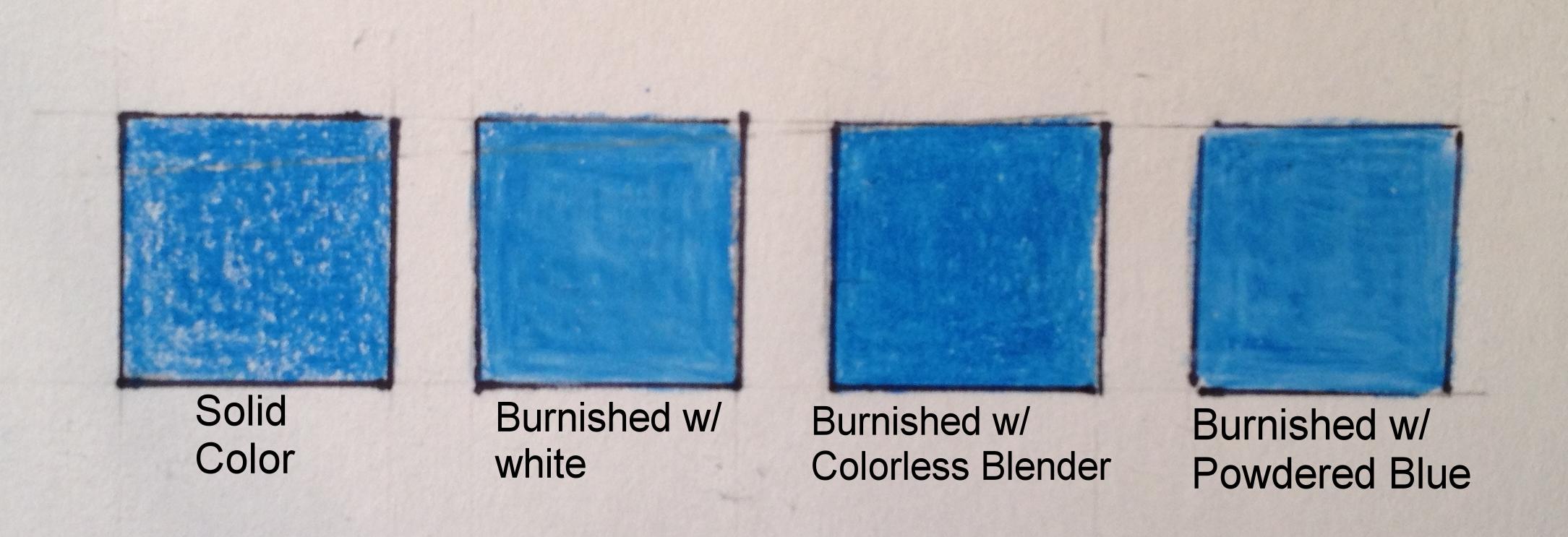
1Burnishing is used to give your art a shiny appearance such as metal, glass, some fruits and vegetables etc.  It is the very last step because after you burnish it is rare that you can layer more color on top of the burnished area.

To burnish is to use heavy pressure and saturating your paper with so much pigment and wax that it obliterates the tooth. The artist can burnish many different ways, such as using a paper stump, a colored pencil of a different color and a colorless blender.  A colorless blender is a wax based pencil with no pigment.

Blending
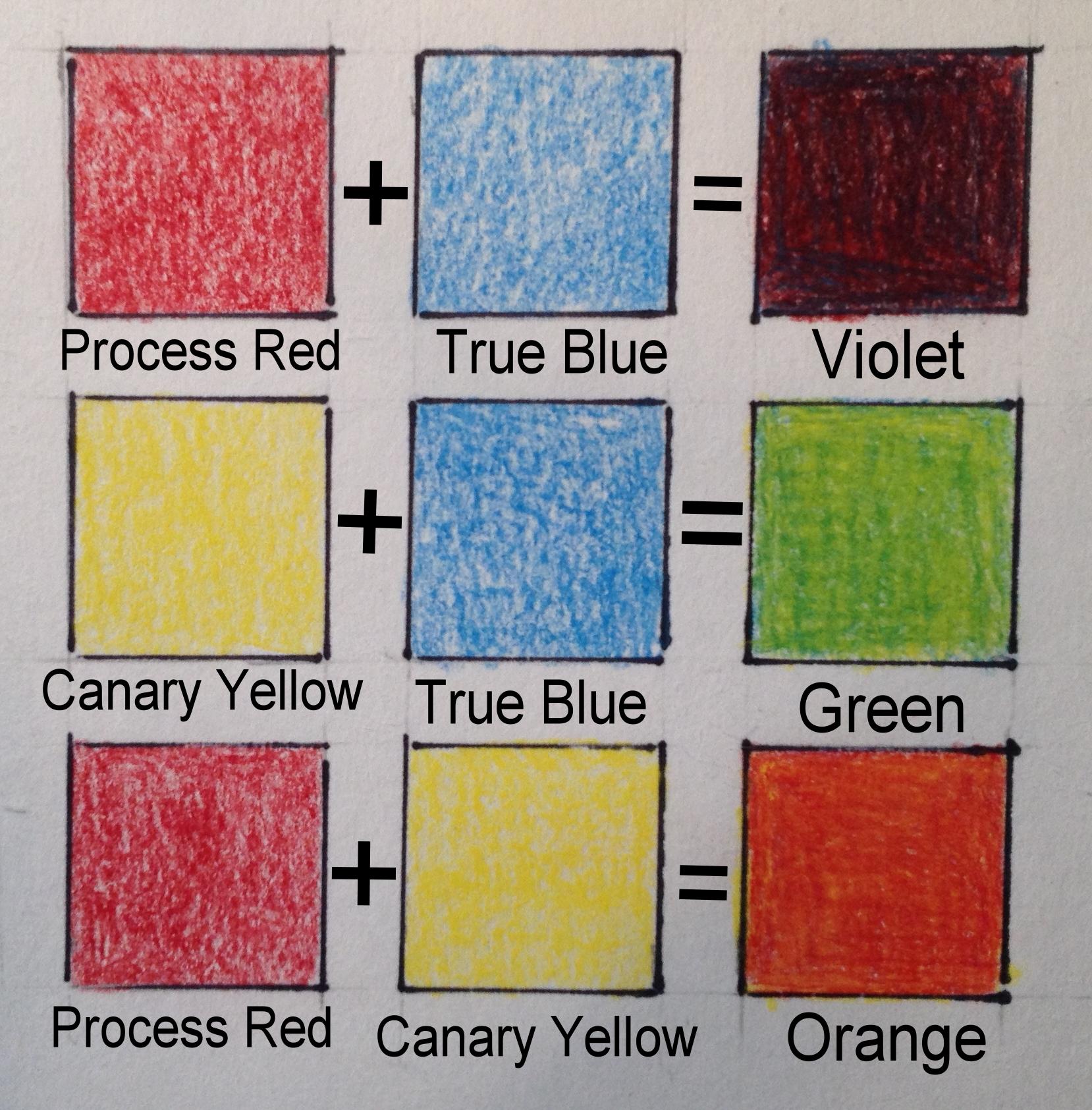
2Unlike acrylic, watercolor and oil which is mixed in a palette, colored pencil is mixed directly on paper. To blend you can either use the Colored Pencil Strokes from the previous lesson or just lay the pencil point on its side to achieve even coverage.  And in the blending of two or more colors,  is where your knowledge of color theory may come in handy. You can also blend with solvents such as:

1.)  Gambasol – use with a paint brush, q-tip, cotton pad or paper stump in a well ventilated area.

2.)  Prismacolor’s Clear Blender It’s like a clear magic marker.  To keep the tip clean between colors and after use, mark sides on a clean piece of white paper.  If you do not do this step, your marker is stained with the previous color and ruined.

This weeks lesson:

1.) One and Two Color Graduations.

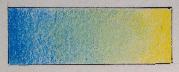
43Starting with a sharp point and heavy pressure, saturated one end of your rectangle with color.  As you progress toward the middle use lighter pressure and fade out.  (If you are having difficulty, try moving your hand up the pencil shaft)For  two color graduations fade out  2/3 of the way through. Then, on the opposite side start the other color.   (The samples above are True Blue, Process Red and Lemon Yellow.)

On your drawing paper draw many 3/4 x 3 in. (approx.) rectangles and in each rectangle  Paint one color graduation and two color graduation bars using colors from the color wheel.

2.)  Take a trip to Lowe’s, Home Depot (or maybe Walmart)  and pick up paint chips in Flat.  Semi Gloss, Satin or Gloss are too distracting.  Pick up as many different samples as you can.

Also See:

Color Theory and the Color Wheel

Color Techniques Part 1

Until next week…

Be Well and Happy!

Techniques Part 1

I hope this finds you a little better acquainted with your colored pencils and getting accustomed with how they perform.  This lesson is as exciting as the last, but just a necessary.  This week we will go over holding your pencil and common colored pencil strokes.

Holding Your Pencil

The way you hold your pencil affects the way write, so it would be safe to assume that it will affect the way you draw.  I don’t think there is any right or wrong way to hold your pencil, but changing the grip changes the style of your art.

No matter what grip you choose, I do find that holding your pencil in relaxed manner will help your avoid sore hands and wrists.

Below is a few ways to hold your pencil:

OverhandUnderhandWriter's

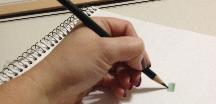
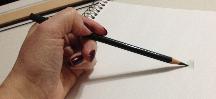
1.)  Overhand grip:  With this position, you are gripping the pencil with the forefinger and thumb while the pencil is resting on your middle finger.  The pencil point is on its side as it strikes the paper.   The strokes are made with the motion of the wrist.  This grip is for heavier markings.

2.)   Underhand grip:  With this position, you are gripping the pencil with your thumb as it lays in the between the index and middle finger.  The pencil point is again, is on its side as it strikes the paper.  The strokes are made with the motion of the arm.  I find this grip awkward and uncomfortable.

3.)  The “writers” grip:  The most commonly used and with this position, you hold the pencil as you would write.  The pencil is gripped with the forefinger and thumb while the shaft rests between those two fingers.  The pencil point can be on its side and directly on the point as it strikes the paper.   The strokes can be made with the motion of the  wrist as well as the arm.  This position is the most common because it gives the artist more control and precision.

close gripfurther back

If you position you hand closer to the end of the shaft, you have more control and precision, but heavier strokes (darker markings).  The further up the shaft you place your grip gives you less control and precision, but lighter stroke (lighter markings). 

Colored Pencil Points


pointblunt


A sharp pencil point  when applied,  saturates color through the texture of the paper.  Sharpening your pencil often, usually every minute or so, will keep work precise as well as saturated with color.

A blunt pencil point when applied,  allows the texture of the paper showing through.  You will be able to see specks of the paper through the pencil.

Colored Pencil Pressure

P Pressue (1)

Colored pencil is a translucent medium.  by changing the pressure on your pencil, you can make three varying degrees of color

Light – tints the paper

Medium – excellent for layering

Heavy –  flatten the paper tooth

Colored Pencil Strokes

P Pressue (2)

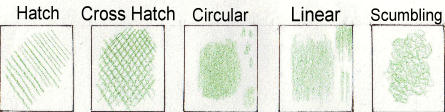
1.) Hatching – Are lines parallel  to each other whether vertical or horizontal. Can be different weights of lines, unevenly spaced and the changing of colors.

2.) Cross hatching – Is the same as hatching but the lines cross over each other in different directions.

3.) Circular– The stroke is more oblong than circular and the most commonly used.  These overlapping circular strokes are the easiest way to achieve even color.  Keep your oblong small and your pencil points sharp.

4.) Linear – Layer in one direction, keeping lines close together. Stagger the line length or you will have bars of uneven color. Make sure that pencil point is sharp.

5.) Scumbling – “brillo pad”  interlocking squiggles.  This stroke is uneven and creates interesting textures.

In this weeks lesson you will need to draw a series of squares of different sizes and fill them with different colored pencil strokes using different points as well as pressures. Practice makes perfect so draw plenty!

Until next week….

Be Well and Happy!
Color Theory and the Color Wheel

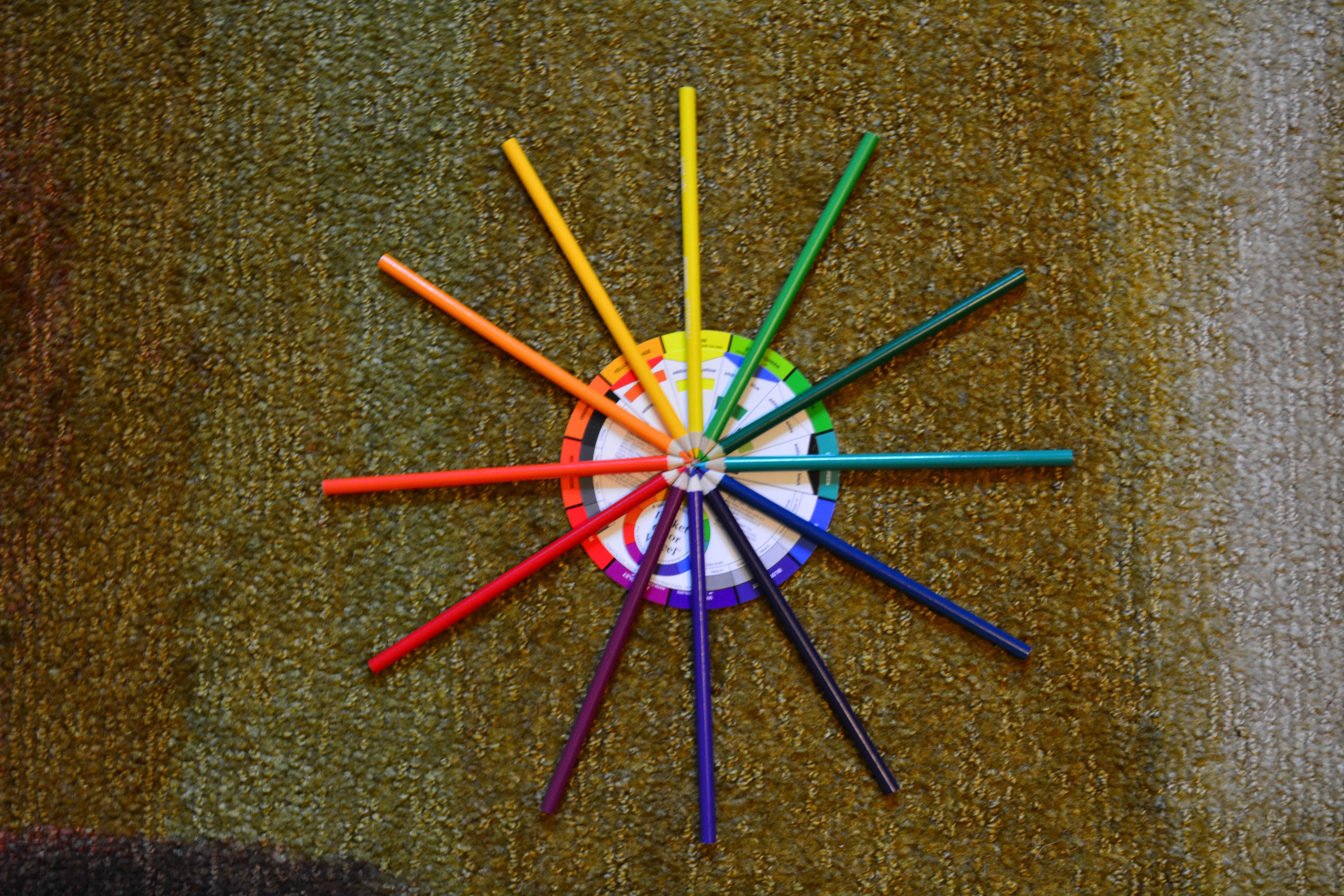
DSC_0480Maybe, you should stop right here and make yourself a cup of strong coffee before you read any further.  I want you to stay awake until the end because it is going to be a long and very dry post.

This information may seem a little redundant as most if not all of this information is available inside every (how to) art book published. But here it is anyway:

Color Vocabulary

  1. Primary Colors:  Colors that can not be mixed from any other color.  On the color wheel the colors are Red, Blue, and Yellow.  In the Prismacolor range the colors are as follows:  Process Red, True Blue, and Canary Yellow.
  2. Secondary Colors:  Two primary colors mixed together.  On the color wheel the colors are Orange, Green and Violet.  In the Prismacolor range the colors are as follows: Orange, Grass Green, and Violet.
  3. Tertiary Colors: One primary color and one secondary color mixed together.  These colors are commonly referred to as hues.  On the color wheel the colors are Blue-Green, Yellowed-Green, Yellowed-Orange, Red-Orange, Red-Violet, and Blue-Violet.  In the Prismacolor range the colors are as follows:  Parrot Green, Limepeel, Spanish Orange, Poppy Red, Mulberry, and Violet Blue.
  4. Warm Colors – Are aggressive colors that make object appear to move toward the viewer. The warm colors are Yellows, Reds, and Oranges.  If these colors are used to the maximum, it will inspire the viewer to feel anxious.  Ex: A painting of fire.
  5. Cool Colors –  Are receding colors that make objects move further away from the viewer.  the cool colors are Greens, Blues, and Violets.  If these colors are used to the maximum, it will inspire the viewer to feel calm. Ex: Ocean scene.
  6. Hue –   Another name for color.
  7. Tint –  Color with added white.  There are so many colors available in this medium today.  It is better to simply choose another lighter color than to layer a white over a darker color.  If you aren’t careful, applying this technique will flatten the vibrancy of the color that you are trying to achieve. (Unless you are burnishing)
  8. Shade –  Color with added black. I have the same feeling with this method as I do with Tint.
  9. Neutral Gray-  White and Black mix. It works but it’s a bit boring.  Using the color’s complementary makes the perfect washes for grays, shadows and browns.
  10. Intensity or Chroma – Brightness or dullness of a color.
  11. Value –  The lightness and darkness of a color.

Color Relationships

Colors create mood and different color combinations,  if applied properly,  will make your work convey the message that you want conveyed.  Whether it be calm, soothing, happy, intense, angry, and sad.  Color is that powerful!

  1. Monochromatic – Using any one color as tone, tint and shade.  The only way that I can explain this is that it like a graphite drawing but using one colored pencil.  Most popular colors to use are Sepia, Umbers and Indigo blue.
  2. Analogue – Are colors that lie adjacent to each other.  On the color wheel one combination could be Blue, Blue-Violet, Violet, and Red-Violet.  In the Prismacolor range the colors are as follows: True Blue, Violet Blue, Violet, and Mulberry.
  3. Achromatic – Colorless scheme using Blacks, Whites, and Grays.
  4. Color and Light – Colors used to create a mood.  Intensifying some and receding other colors.  Ex: Painting of a dark street with one lone street light.  Intensifying the colors of the light and dulling out the surrounding street makes the light brighter dulling and receding the surrounding area.
  5. Complementary – Combining a tint or tone of one color and the color opposite of the color wheel.  Choosing a color’s complementary creates  neutral shades, shadows and a mix of beautiful grays and browns. Ex:  Yellow’s complement is Violet. In the Prismacolor range the colors are as follows:  Canary yellow, and Violet.
  6. Split Complement – Choosing a color and using colors on each side. Ex: Violet, Yellowed-Orange, and Yellowed-Green.  In the Prismacolor range the colors are as follows: Violet, Spanish Orange, and Limepeel.
  7. Diad – Using two colors that are two colors apart on the color wheel. Ex: Red and Orange.  In the Prismacolor range the colors are as follows:  Process Red and Orange.
  8. Traid – A color scheme in which three colors are equally spaced from each other on the colored wheel.  Ex: Red, Blue, and Yellow.  In the Prismacolor range the colors are as follows:  Process Red, True Blue, and Canary Yellow.
  9. Tetrad – A contrast of four or more colors on the color wheel. ex: green, violet, red and yellow.  In the Prismacolor range the colors are as follows: Grass Green, Violet, Process Red and Canary yellow.
  10. Double Complementary – Color scheme that is two colors next to each other on the color wheel. Ex: green, yellowed-green, red, and red-violet.  In the Prismacolor range the colors are as follows: Grass Green, Limepeel, Process Red, and Mulberry.

This information barely scratches the surface.  If you are interested in a more in-depth study in color theory there is plenty of information available from the web as well as books dedicated to this subject.  If you draw from imagination you really need a intense working knowledge of color theory.  When drawing fantasy, your art still has to flow and the colors have to visually make sense, even if your skies are green and your trees are blue.

But if you are like me and you draw what you see,  simply separating your colors into their color family and knowing it’s complement will take care of most of the issues an artist would have in choosing suitable colors to make your art flow as it should.

Which leads us to this week’s lesson.

1 – Separate your pencils in to their Color Families. Below is the list of each family and a sample pencil color from each group.

Color                                         Prismacolor Color

Yellows                                       Canary Yellow

Yellowed-Oranges                    Spanish Orange

Oranges                                     Orange

Red-Oranges                            Poppy Red

Reds                                           Process Red

Red-Violets                               Mulberry

Violets                                       Violet

Blue-Violets                             Violet Blue

Blues                                        True Blue

Blue-Greens                           Parrot Green

Greens                                     Grass Green

Yellowed-Greens                    Limepeel

Additional:

Warm Grays

Cool Grays

French Grays

Metallics

Browns

***If you are having trouble choosing where a color should be classified, scribble your pencil on the edge of white sheet of paper.  You should be able to match it to the appropriate color family from one of the hue samples on the back of the color wheel.

2 – After you finish  grouping your colored pencils, you will need to make a chart.   There are many ways to this:

Chart A book – using card stock

Chip    A color chip using card stock

A Color Wheel Chart (click link)

IMG_5378

This is what I find to be the most useful.  This was printed out on printer paper.

Whatever method you use, Be sure to list and include:

~The Brand of pencil

~ Number of pencil

~Color of pencil

~ Make each swatch 3/4 in. square and saturate each  with color (be heavy handed)

~Punch hole center of swatch area (that is lacking in two of the above examples).

This may seem boring, but it will give you a chance to get acquainted with your pencils as well as a working knowledge of how they perform.

Until next week….

Be Well and Happy!

New Series!

I’m starting a new series Monday!

Getting started in Colored Pencil

So, if you would like to follow along you will need:

1.)  Colored pencils –  Most popular -Sanford’s Prismacolor

Or just use what ever you have…. If it’s student grade: The lead is much harder  and the color won’t be as vibrant as Prismacolor,  but all summer I painted in  my Zentangle and card making pencils,  which is a mix of 50 count Crayola, Michael’s Artist Loft, and Joann’s Fabric’s Simply Art.  Just get as many different colors as you can get your hands on!

Don’t think you can’t make beautiful art with student grade supplies…Because you can!

2.)  Kneaded Eraser or Poster Putty

3.)  Color Wheel

4.)  Pen and Pencil

5.)  Click Eraser

6.)  Drawing Paper or Vellum 90 lb. or above

7.)  Sharpener

8.)  Hole Punch

9.) Printer paper

10.) Rubber bands

11.) Scotch Removable Tape

12.) Blending stumps and/or Q-tips

Optional:

13.) Battery operated eraser – I LOVE LOVE LOVE MINE!  It’s only about $6.00 at Michael’s and with their weekly 40% coupon?  Buy one if you can!

14.) A circular template of some kind.

15.)  Small black card and a small white card with a hole punched in the center

Hope to see you there!

Be Well and Happy!

You’re Beautiful!

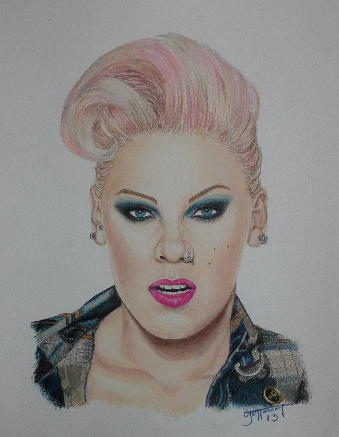
Pink 1

Pink – Fan Art

Prisma Color on 9 x 12  98 lb.  XL Canson Mixed Media

 I know, I know…Pink didn’t sing You’re Beautiful, I am just stating a fact

When you draw or paint someone, the whole face is broken down into minute details.  I never realized just how beautiful people are until I started studying them.  And it isn’t just hypnotic eyes, a great set of perfectly arched brows or that square jaw that makes a person attractive.  It’s what we see as flaws that makes us beautiful and unique.  I’m not saying that you shouldn’t turn that one brow in to two…cause if ya can (male or female)  you should. And I’m definitely doing all I can to slow that clock down.  But some things should be left alone.  Take Pink for example:  What I find is her most attractive feature is her front teeth.  The left tooth is a bit crooked and sticks out the tiniest bit.  Excuse the language, but she’s such a badass (there is no other word to describe a woman who can hang from a ceiling wrapped in a rope) that to me it gives her a little bit of vulnerability.  And makes her absolutely gorgeous in my book!

On with the portrait:  Pink is my first portrait painting and she wasn’t easy, but a joy to paint. The plaid shirt is what gave me a fit.  But when things got too difficult, I would just stop, take a breather and paint a little more.  I should have timed myself, but I  definitely have a lot of days and nights invested in this head study.

This portrait ends my summer on a good note because I did what I set to do.  And that was to complete art in colored pencil.

I hope this post finds you all having a beautiful and creative weekend.  And remember, you are beautiful.  And if you don’t see it then you aren’t looking in the right places 😉

Be Well and Happy!

Tada!

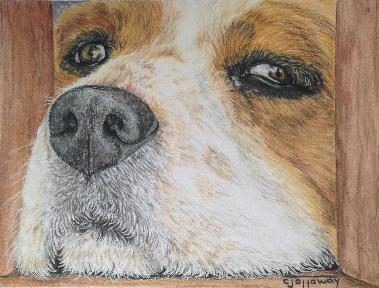
colored pencil dog

Beagle

5 x 7 Colored Pencil on Canson XL Mixed Media

Well, I said I wouldn’t post any art unless it was colored pencil and here it is.  I am so pleased with how this turned out. My favorite part is the eyes.  Man, I love drawing them eyeballs, LOL…

I am learning so much and I am getting more comfortable with colored pencil, it’s still a struggle but it is more controlled (which is a good thing).  And I am very excited to start something else, as soon as I figure out what that something is 😉

You guys have a great weekend!

P.S. Colored pencil Lovers: If you are looking for a paper give the Canson XL mixed media a try.  This paper has a lot of tooth and at 7.98 a pad from Jerry’s Artarama, it’s a real bargain.

Be Well and Happy!

Family Vacation 2013: Biltmore Estate-Part 1

Sorry for my absence.  But art wise up until a couple of days ago, I’ve been doing technical boring stuff in trying to get acquainted with my colored pencils.  I do have a piece started, that I’m fairly excited about, but so far I have only the background completed.

This year we were able to take a family vacation for the first time in years.  I can’t say it was relaxing and we were always on the go, but it was jam-packed with site seeing….I love trips like that.  It was extra special because the three of us got to spend time with each other without worrying about work or talking about school, or household chores 🙂

The first couple of days we went to Asheville so we could tour Biltmore Estate. This mansion was built by George Washington Vanderbilt and is the largest private residence in the nation.   The mansion is  178,926 square feet featuring 250 rooms representing the Gilded Age.  Today, it is still owned by the Vanderbilt descendants.  I think they or at least some of the family live on the property.

You talk about stupid money!… I love that place and this is was our third time visiting, but this was Alana’s first visit.

DSC03386 alana

And she actually enjoyed it too.  She’s a photography buff, so there was no shortage of interesting things to capture on camera.   If you live in the area and planning a wedding, this is the perfect place.  It has such a romantic setting.  Maybe one day I can talk Alana into getting married here…One day, a long way away, in the very,  very distant future, lol…

After touring the house we toured the gardens.  They were beautiful, but it was a tad bit too hot to go traipsing around, but we sucked it up.

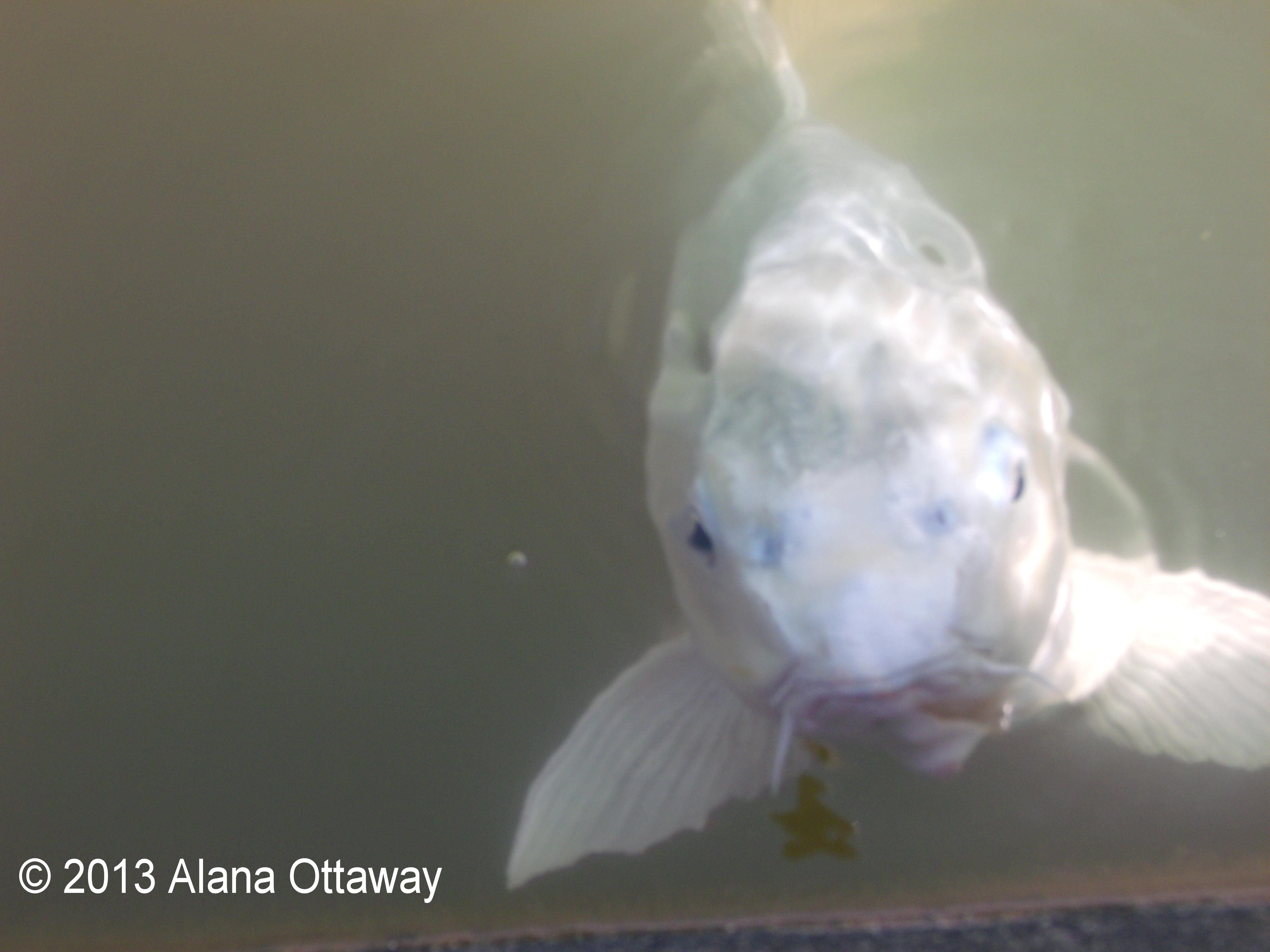
The  coy fish in the picture below loved Alana.  It was the strangest thing.  The white coy would follow her around the pond, it would face her and also jump out of the water toward her.  I don’t know if it was her clothes or her camera but something drew this fish to her like a moth to a flame.

GEDSC DIGITAL CAMERA

After touring the house and the gardens we toured the winery.  It was pretty interesting.  I’m not a wine enthusiast and not one to be able to appreciate a dry red wine so I found the taste pretty bitter. I did like the white sweeter wines though.  Poor Alana was bored to tears watching us drink, but she was a good sport about it.

Well, That’s it for Part 1 of our vacation.  Stayed tuned for Part 2:  ” The Ottaway’s Go To Washington.” hahaha

Be Well and Happy!

Welcome to my mess…

photo

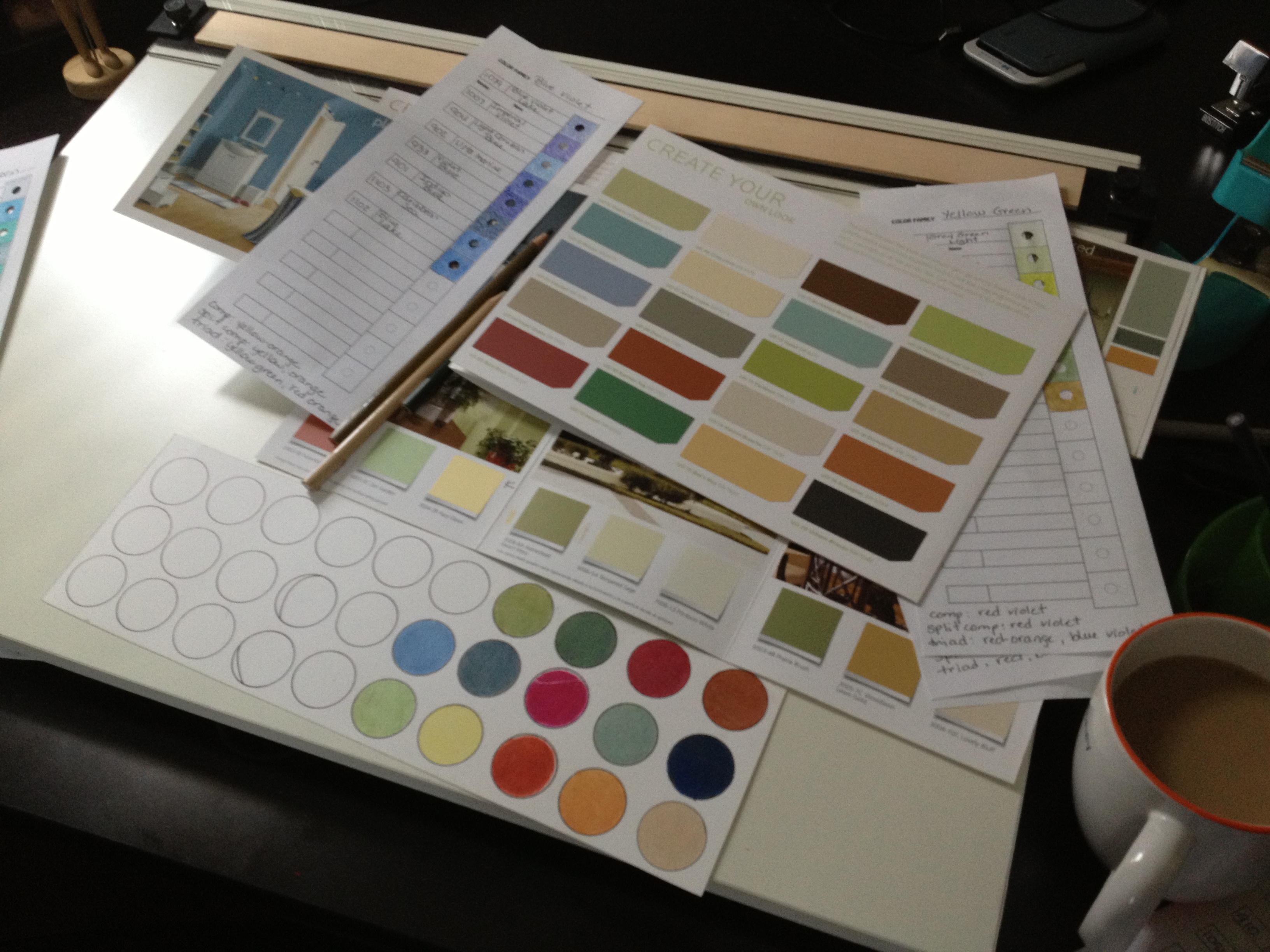
I’m a girl on a mission!  I have made a commitment to myself to learn how to mix color using colored pencils AND produce some artwork by the end of summer!  That means no Zentangling, no drawing and no sketching.  I love to draw but it was  my intention to learn to draw as a means of kick starting color work.  Instead  it’s all I do, because to me it’s easy and easy means safe.  So I’ve put my pencils away (for now) and my desk is littered with colored pencils.  Annnd of course my double cup a coffee!

Yes, once again my poor blog is suffering (as usual) but I’ve been so blessed to have the supplies, the space and the time to learn how to use colored pencils, and it’s a real shame that these lovely things are gathering dust.

I have been taking a video workshop and I have learned more in the first 15 minutes than I have  gleaned from the colored pencil books that line my shelves, that’s for sure.  I have always thought in books when artists convey techniques they either over simplify information or over complicate the information leaving a lot of stuff out.  Either way it’s confusing. But I guess I should factor in the fact that I never grade well in following directions in school, lol.

Now,  I am using my own technique in mixing colors and my own way of getting to know my pencils, but it’s working and I am feeling a little more confident in mixing.  So far their hasn’t been one color that I haven’t been able to match, so yay me!  This is a huge hurdle and I’m absolutely ticked to pieces.


Be Well and Happy!

Zenday!

Zendala 58

Zendala Challenge  # 58

Zendala 59

Zendala Challenge #59

Micron and Graphite on Bond

Created by Erin at the Bright Owl

     Hello!  As you can see,  I’m doing a little catch up since I haven’t been posting lately.  Everything is going good, but I reckon my muse went on hiatus. I can’t  find anything that I want to draw.  I have been doing a little colored pencil practice, but it isn’t really a show and tell type of thing.  It’s been fun though.

   I have been reading a lot and enjoying quite a few happily ever afters on our new Kindle e-reader.   It’s a nifty little device that’s for sure.  I ordered it so Alana could read library books and not tie up our devices.  But come to find out she reads only when she is out of options in finding something enjoyable to do.  I guess I learn something new everyday, LOL ….that’s okay, more fun toys for meeeeeeee…..

Be Well and Happy!